MongoDB
The Railway MongoDB database template allows you to provision and connect to a MongoDB database with zero configuration.
This deploys a single node that Railway maintains. For a managed database with automatic failover, convert it to high availability and turn on backups. What Railway manages lists who handles each operation.
Deploy
Add a MongoDB database to your project via the ctrl / cmd + k menu or by clicking the + New button on the Project Canvas.
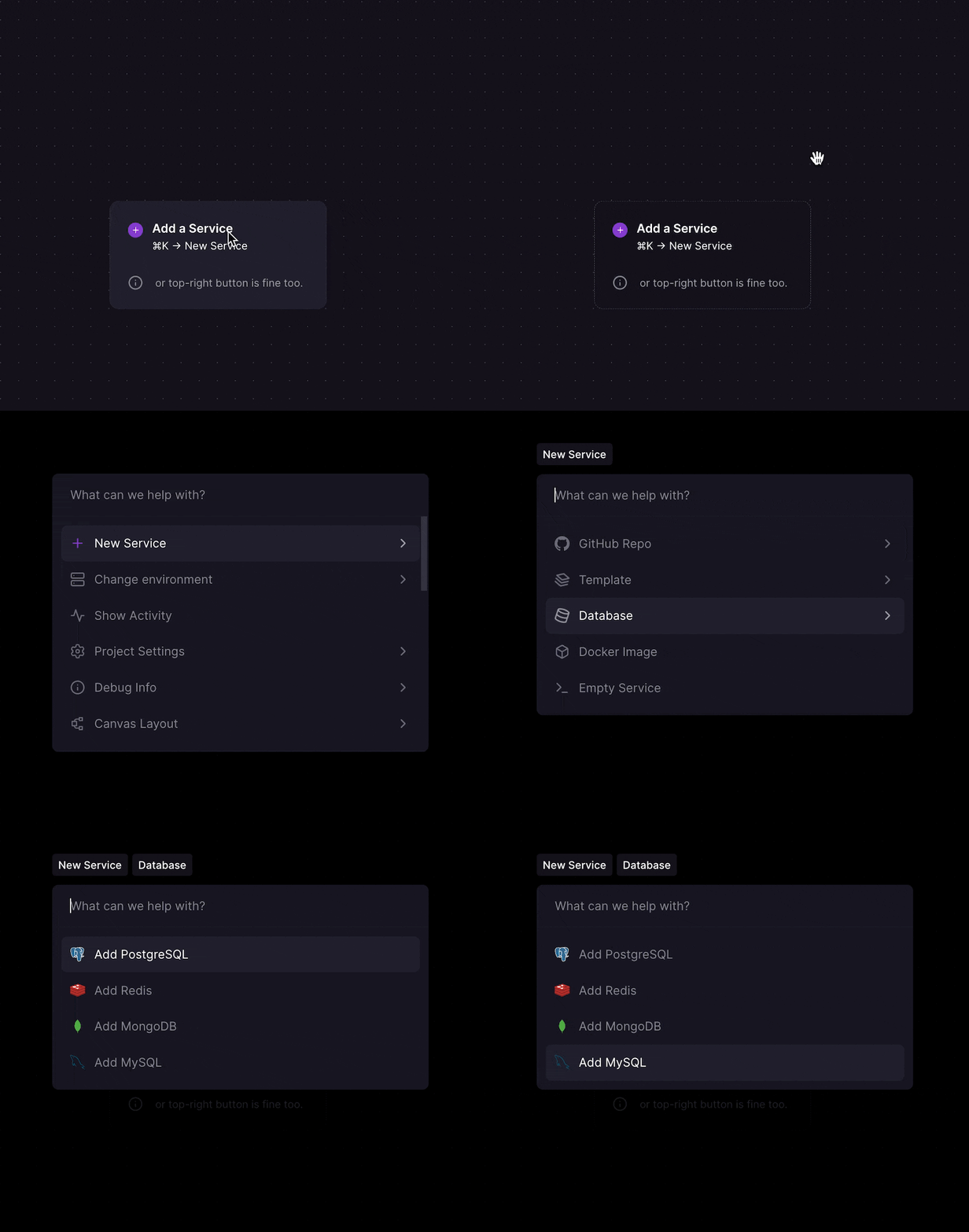
You can also deploy it via the template from the template marketplace.
Deployed service
Upon deployment, you will have a MongoDB service running in your project, deployed from the official mongo Docker image.
Custom start command
The MongoDB database service starts with the following Start Command to enable communication over Private Network: mongod --ipv6 --bind_ip ::,0.0.0.0 --setParameter diagnosticDataCollectionEnabled=false
Connect
Connect to MongoDB from another service in your project by referencing the environment variables made available in the Mongo service:
MONGOHOSTMONGOPORTMONGOUSERMONGOPASSWORDMONGO_URL
Connecting externally
It is possible to connect to MongoDB externally (from outside of the project in which it is deployed). Databases are deployed private by default — to expose one, open the service's Settings → Networking and add Public Access. This creates a TCP Proxy and populates a MONGO_PUBLIC_URL variable with the external connection string.
Keep in mind that you will be billed for Network Egress when using the TCP Proxy.
Modify the deployment
Since the deployed container is pulled from the official MongoDB image in Docker Hub, you can modify the deployment based on the instructions in Docker Hub.
High availability
A MongoDB service can be converted into a high-availability replica set with automatic failover from its Database → Config → High Availability section. See Upgrading MongoDB to High Availability.
Backup and monitoring
Especially for production environments, performing regular backups and monitoring the health of your database is essential. Consider adding:
-
Backups: Automate regular backups to ensure data recovery in case of failure. We suggest checking out the native Backups feature.
-
Observability: Implement monitoring for insights into performance and health of your database.
Additional resources
Railway maintains this template; what Railway manages lists which operations Railway handles and which are yours. Changing the template as shipped, such as its image, start command or variables, makes the database yours to manage; see database support scope.
We strongly encourage you to refer to the source documentation to gain deeper understanding of their functionality and how to use them effectively. Here are some links to help you get started: