SAML Single Sign-On
SAML SSO is available on Railway Enterprise and eligible committed spend plans.
Single Sign-On (SSO) lets workspace members sign in to Railway through your organization's identity provider (IdP), including Okta, Auth0, Microsoft Entra ID, Google Workspace, and any SAML or OIDC provider.
Pair SSO with SCIM directory provisioning to automatically add and remove workspace members when assignments change in your identity provider. Without SCIM, members join the workspace through direct invitations or optional domain-based automatic joining.
Configuring SAML SSO
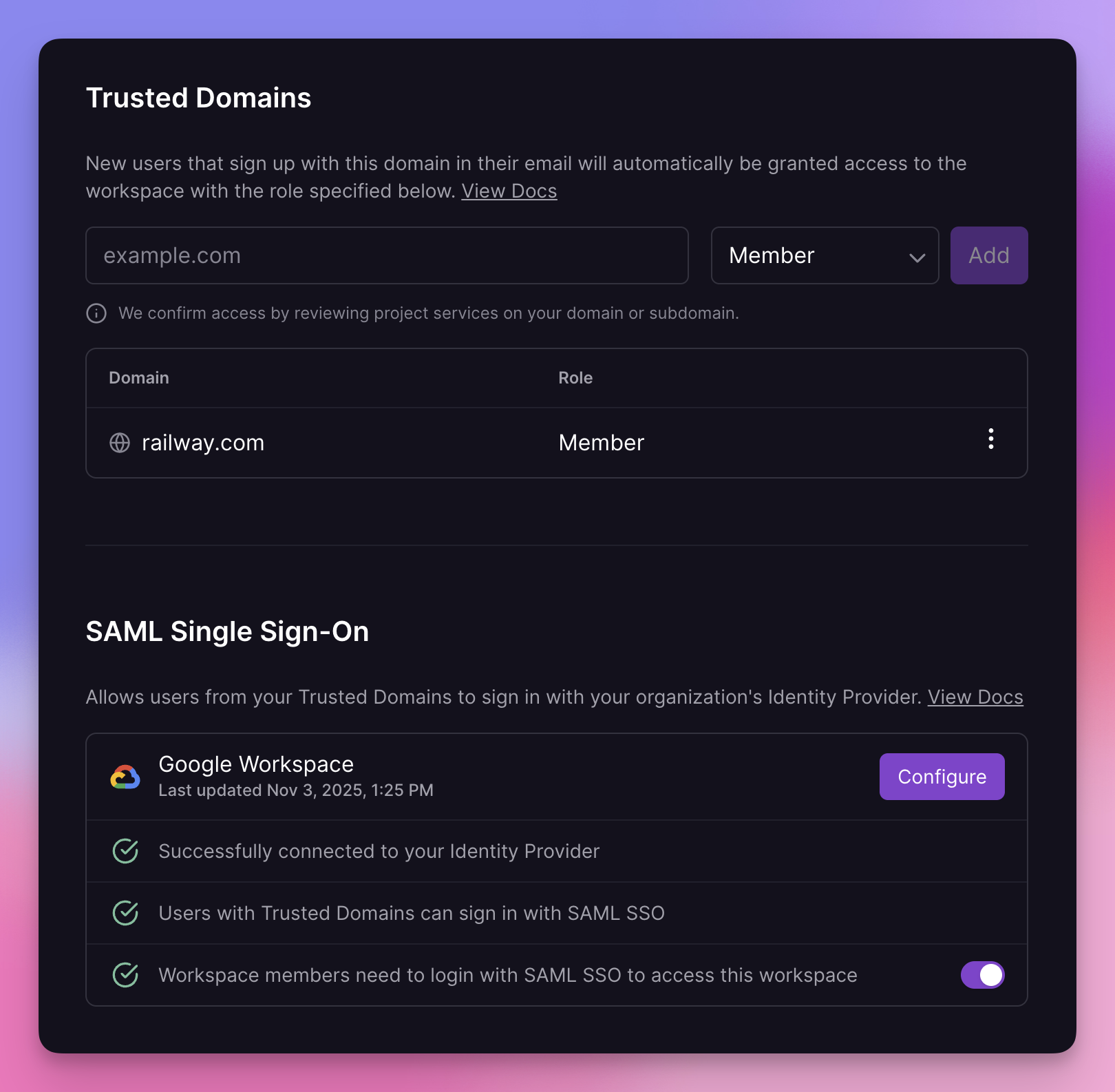
To configure SSO, open your workspace Security settings. You must be a workspace admin with access to your identity provider's admin console.
- Add and verify your organization's email domain under Verified email domains.
- Under Single sign-on, click Enable if SSO has not been initialized yet, then click Configure SSO.
- Follow the guided setup portal to connect your SAML or OIDC identity provider to Railway.
- Optional: Configure SCIM provisioning to automate user onboarding and offboarding from your identity provider.
- Optional: Enforce SAML SSO after testing sign-in to require members to authenticate through your identity provider.
Once configured, members can log in using SSO with their verified organization email address. Existing Railway users must update their Railway account email if it differs from their identity provider email.
Note: If you're on an Enterprise plan and don't see Single sign-on in your workspace Security settings, contact Railway support.
Enforcing SAML SSO
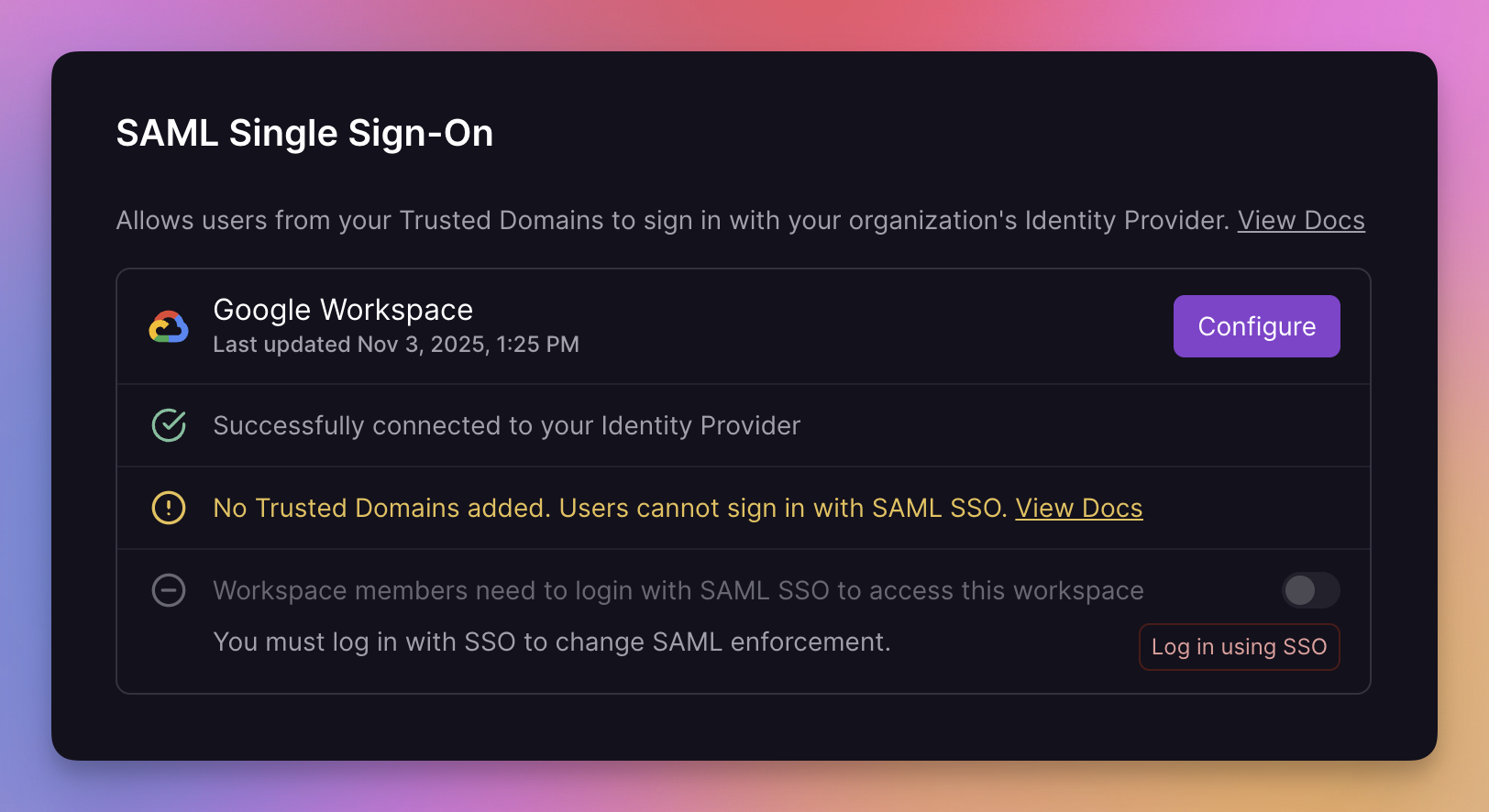
Workspace admins can enforce SAML SSO so every member must authenticate through your workspace's identity provider connection before accessing the workspace.
- Toggle Workspace members need to login with SAML SSO to access this workspace on under Security settings.
- Only workspace admins whose current session was authenticated via the workspace's SSO connection can change enforcement. Click Log in using SSO in Security settings if prompted.
- Enforcement takes effect immediately. Members with non-SSO browser sessions must re-authenticate through your identity provider to open the workspace or access its resources.
Note: Because a Railway user can belong to multiple workspaces, enforcing SSO does not block other login methods on their personal account. Members must authenticate via your workspace's SSO connection whenever they access the enforced workspace. CLI sessions and API tokens remain governed by workspace membership, so enable SCIM provisioning or remove departed members from the workspace to revoke API tokens and workspace access.
Login using SSO
After SSO is active, workspace members can sign in using any of the following methods:
- Enter their organization email address on railway.com/login by selecting Log in using Email and then Log in using SSO.
- Open the workspace's dedicated SSO sign-in link when prompted by SAML enforcement.
- Launch Railway directly from their identity provider's dashboard using IdP-initiated SSO.
Renew your SAML certificate
Your identity provider signs each SAML response with an X.509 certificate, and Railway uses that certificate to verify the sign-in. Certificates expire, and lifetimes vary by identity provider.
When the certificate expires, new SAML SSO sign-ins to your workspace fail until Railway has a renewed certificate. If you enforce SAML SSO, members who aren't already signed in with SAML SSO can't open the workspace until then.
Use a metadata URL
If your identity provider publishes a metadata URL, use it when you configure SAML SSO instead of uploading a metadata file. Railway monitors the URL, so it picks up a certificate your identity provider rotates without any action from you.
Okta, Microsoft Entra ID, ADFS, and PingOne support metadata URLs. Google Workspace, JumpCloud, OneLogin, and Rippling don't, so you must renew certificates from those providers manually.
Renew a certificate manually
Renewing a certificate manually takes access to your identity provider's admin console and a Railway workspace admin account.
- Create a new signing certificate for your Railway SAML application in your identity provider. Refer to your identity provider's documentation for the exact steps.
- Navigate to your workspace Security settings.
- Click Configure SSO under Single sign-on to open the SSO settings portal.
- Switch the Railway SAML application to the new certificate in your identity provider, then download the updated metadata file or certificate.
- Update the metadata configuration in the SSO settings portal with the new metadata file or certificate, and save.
- Click Test sign-in in the portal to confirm the connection works.
New SAML SSO sign-ins fail between steps 4 and 5, so complete them together. Members who are already signed in with SAML SSO stay signed in.
Once the connection is active, the Single sign-on section shows SSO connection active.
Supported identity providers
Railway supports identity providers compatible with SAML 2.0 or OIDC, including:
- Okta
- Microsoft Entra ID (Azure AD)
- Auth0
- Google Workspace
- JumpCloud
- ADP
- CAS
- ClassLink
- Cloudflare
- Ping Identity
- CyberArk
- Duo
- Keycloak
- LastPass
- Login.gov
- miniOrange
- NetIQ
- OneLogin
- Oracle
- Rippling
- Salesforce
- Shibboleth
- SimpleSAMLphp
- VMware Workspace
SSO-related events
Railway sends workspace notifications when important SSO lifecycle events occur:
- SSO Connected: Triggered when an identity provider is connected to the workspace.
- SSO Disconnected: Triggered when an identity provider is disconnected from the workspace.
- SSO Updated: Triggered when SAML enforcement is enabled or disabled.
- SAML Certificate requires renewal: Triggered before and after a SAML signing certificate expires so admins can upload a renewed certificate in Security settings.
- SAML Certificate renewed: Triggered when a SAML certificate is renewed.